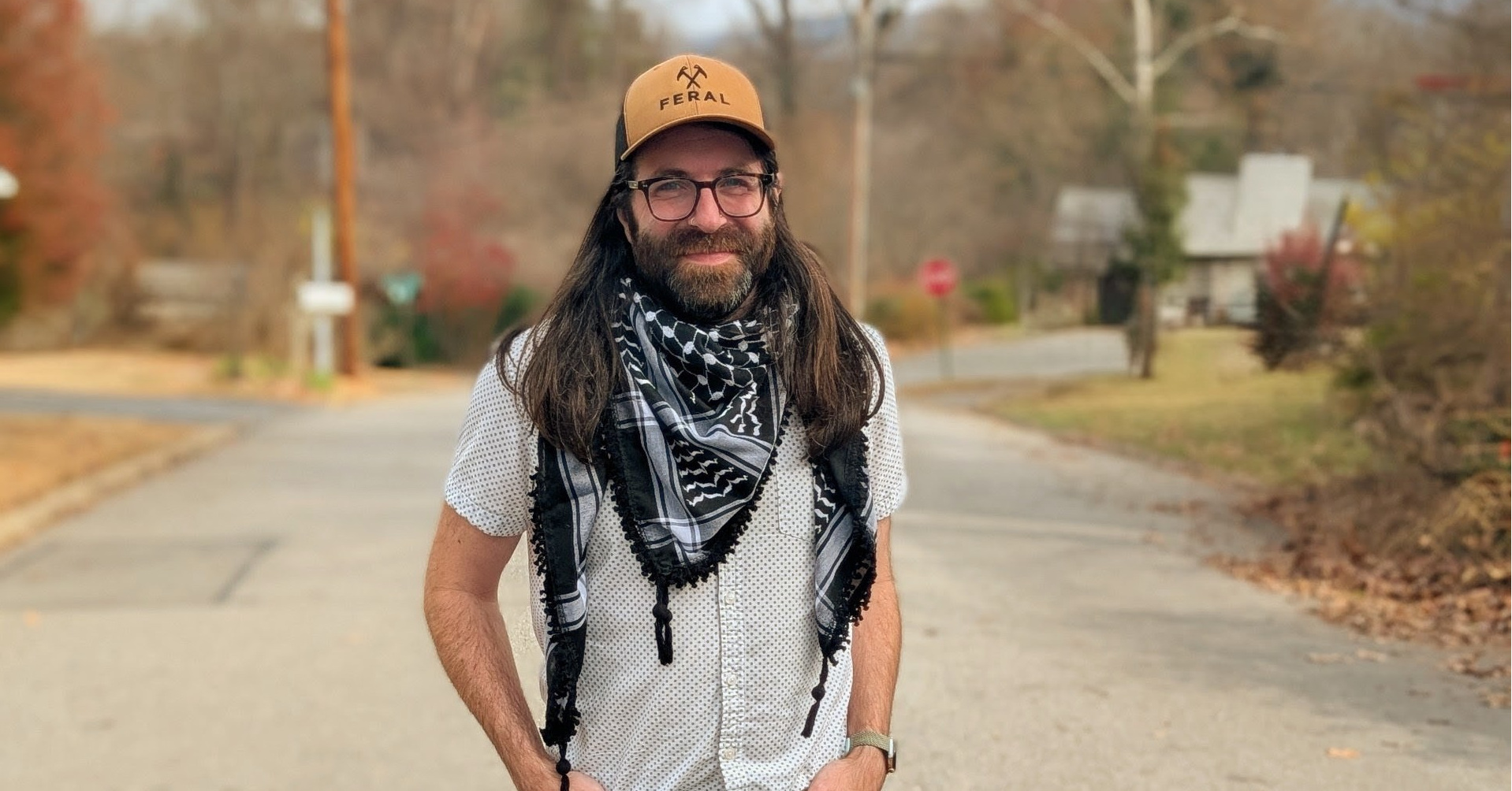
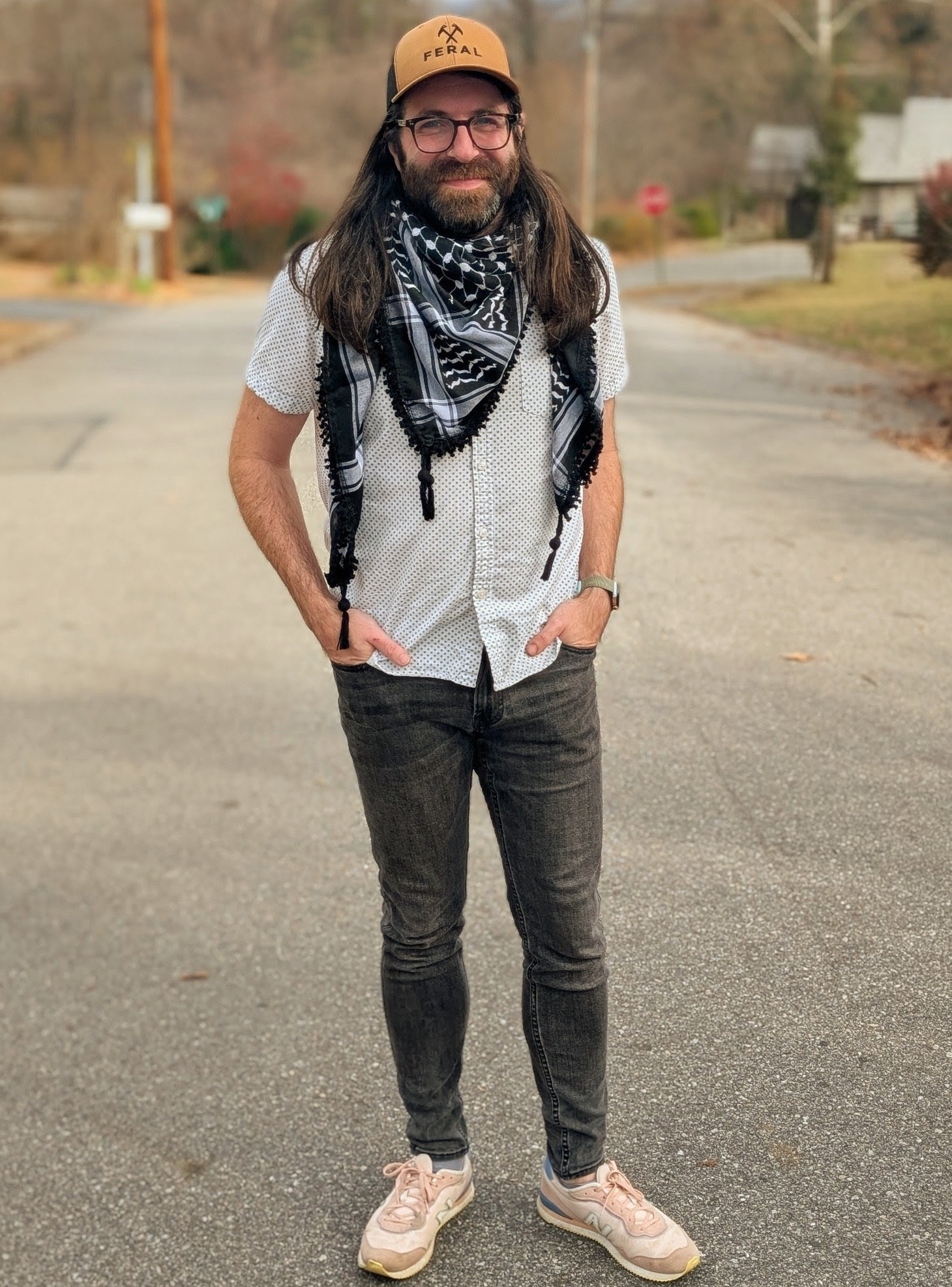
Dan's Platform
Asheville has become a city that isn't for it's own citizens. City council forgot that our brilliant neighbors that showed their mettle over the last year are what we need to treasure and protect, and I'll fight for them and make Asheville place for everyone, not just business owners and the already wealthy.
Making Asheville Affordable
Link Copied!
I need to tell you a story.
In the winter of 2004, I lived outside of Chicago. I was living paycheck to paycheck, getting paid slightly above minimum wage, just scraping by like so many families do right now. I lost my job because I got sick for an extended period of time. Because I lost my job, I lost my housing. And I ended up homeless.
Eventually, through a combination of luck, fortune, and help from friends, I found my way back to an apartment (back when you could rent an apartment for $500/mo).
It wasn’t because I worked harder than any other person who has lost their home; it wasn’t because I did something that a lot of other families haven’t tried. It was simply because I just got lucky enough, long enough, to get back on my feet.
I understand how hard it is here for people to get by in Asheville. I’ve been in the same places that many working class families in Asheville have been. I’ve felt how everything just squeezes in on you from all sides, and one wrong step can mean the difference between staying in your home or living on the streets.
What happens if the economy struggles under Donald Trump and the Republican-controlled federal government? What happens to the 42% of North Carolinians who are currently living paycheck to paycheck if they lose their jobs because the economy crashes? How many of our neighbors will no longer have a safe place to exist?
We need to plan for a future in the face of the problems of the present, and we can do that together.
After Hurricane Helene, we worked together to mend and make whole the things that could be repaired. We found housing for our neighbors; we made space at our table to feed each other. In times of chaos and struggle, like now, what stops us from doing that again?
This is a really personal story to me, and why I believe in the importance of making Asheville affordable. If we want to prepare for an uncertain future, we need to actually prepare.
Please read the other points for more specific policies I'll work towards.
My platform is long and detailed, and that’s intentional. I truly believe that our city doesn’t need more promises and empty words. We need real policies that can finally address our needs.
Link Copied!
Housing in Asheville is neither affordable nor accessible. We need to build housing that is accessible for everyone.
Mayor Esther Manheimer has been in office since 2009, and has been an integral part of developing the Affordable Housing Plan by the city. But given how things have been over the past decade, it is time for new, bolder plans. I propose we:
- Stop carving out exceptions on affordable housing that benefit developers rather than our neighbors.
- Require every new residential development to have at least 15% of units priced affordably for first-year teachers or firefighters in Asheville, similar to the policy in Davidson, NC.[2]
- Encourage and develop community partners for non-profit, community land trust, and co-operative housing developments in Asheville.
- Fully fund programs in the city that educate our neighbors about eviction and foreclosure assistance.
- Build more housing to help our unhoused neighbors move into stability. We can do this in a way that’s less costly than our current model. Denver’s program saved around $3,800 per person in emergency services, legal expenses, and law enforcement costs; provided funding for investors with a social impact bond; and could be copied into Asheville to reduce homelessness, increase safety for everyone, and save money.[3], [4]
Footnotes:
- [1] - City of Asheville's Affordable Housing Plan
- [2] - Davidson, NC's policy on affordable housing
- [3] - Systematic Research Review Finds Benefits of Housing First Programs in U.S. Outweigh Cost
- [4] - Denver’s program also reduced police contacts, which helps our already strained police department.
Link Copied!
The city has tools to enforce under-utilized code requirements on bad landlords.
- There are too many rental units in Asheville that don't meet reasonable code requirements for safety. But when our neighbors have complaints about unsafe living conditions, often nothing is done to remediate those problems by owners.[1]
- The Asheville City Housing code isn’t sufficient to handle what’s safe post-Helene, and the city council should work to remediate the housing code.[2]
- Complicating all of this, landlords have too big of a voice in city council, which makes every single renter in Asheville worse off.
- Making rental units safe is harder now because the State Legislator (once again) has rejected proactive inspections as an appropriate way to determine if a rental unit is safe, so the city relies on a complaint line instead.[3], [4]
- I'll work to create a framework for handling these cases that don’t let landlords off the hook and give code enforcement officials more power to impose significant fines on repeat offenders for residential units.
- Then the City should spend time informing renters with a ‘know your rights’ campaign on what safe and habitable housing is by law in Asheville, and provide easy ways to send information to code inspectors.
- Repeat offenders will be subjected to greater inspection. If landlords make living safely harder for residents, we have a duty to keep a closer eye on those landlords.
- For the chronic and egregious violators who refuse to comply with code, I'll introduce ordinances to use the court system to seize the property and leverage community land trusts and non-profit housing models in order keep people in their homes and chronic and egregiously bad landlords from profiting at the expense of renters.[5]
Footnotes:
- [1] - BPR Report on Evergreen Ridge’s Mold Problem
- [2] - Asheville City Housing Code
- [3] - MountainXpress - Due to new state law, Asheville can’t require inspections for rental properties
- [4] - NC Leg Statue 160D-1207 on periodic inspections.
- [5] - NC Leg Statue 160D-1130 on receivership for chronically out of code units.
Link Copied!
Asheville needs more affordable housing, and we really needed it a decade ago during Mayor Manheimer’s tenure. The next best time is now though.
Asheville has a ‘missing middle’ housing problem. We don’t need yet another study to prove this.[1] There has been some effort on fixing this in the past, but it’s been slow, inefficient, and ineffective. We need faster, bolder, and more creative approaches to resolve the housing crisis in Asheville.
- We must prioritize projects that meet the threshold of 50% of their units being affordable. These projects should go on every regulatory body’s priority list: permitting, inspection, paperwork, etc. If a developer is actually building housing that first year teachers and firefighters can afford, I’ll work to prioritize those projects over anything else in town.
- We need to increase funding for city positions related to housing. We have so many housing challenges ahead of us, from post-Helene recovery to code enforcement, and we need to prioritize getting the work done now instead of later.[2]
- The City has cut nine jobs from Permitting, Inspection and Code Enforcement since 2023. If we need to make sure housing is built, we need to apprentice and train people to make it happen faster within our system. We can work with A-B Tech to do this and provide good paying, community helping jobs for our neighbors.[3]
- City officials must be more transparent with our performance measures on housing, and what our realistic goals are for housing. This will allow us to become responsible stewards of the land, and have a greater positive impact for our neighbors.
- Asheville has built community housing before with the Williams-Baldwin teacher campus. It’s been successful, but it just needs to be scaled up to actually resolve the housing crisis instead of sitting back and hoping private market rate housing will save us.[4]
- For more ways on how the city can finance housing projects: check out my section under An Economy For Everyone: Keeping money in Asheville, for Asheville.
Footnotes:
- [1] - Asheville’s missing middle housing study.
- [2] - FY 2026 Adopted Budget Document for Asheville, pg. 64
- [3] - This is the development services department
- [4] - Williams-Baldwin Teacher Campus is a good model that Asheville could build on to provide housing for the people who work in our city to live in our city, and which would open up more housing vacancies both inside and outside Asheville and reduce housing demand and be one lever to lower rents indirectly.
Better Food Security
Link Copied!
After the hurricane, when we didn’t have power, water, or access to stores, the question before every one of us became, “Where were we going to get our next meal?”
When our community’s food needs were the greatest, Ingles - our neighborhood Corporate Grocery Store - blockaded their stores with police. And there are two problems that really should be talked about here: the first is that Ingles’ response to our food crisis didn’t reflect a true partnership with the food needs of our community. And the second is that in this time of crisis, when we needed everyone looking after each other, our civil servants - the police - were busy guarding Ingles' profits.
My values say that in times of crisis, we all help each other. In that moment, the City of Asheville, the Asheville Police, and Ingles did not do everything in their power to help feed our community.
But this is bigger than the hurricane. The truth is, every day we all navigate our need for food. For some, it’s easy. Maybe even joyful. But because of the deeply inequitable wealth distribution in our community, for others, getting enough to eat is nearly impossible. And it simply shouldn’t be that way. Every single one of us deserves access to healthy, safe food.
When the federal government intentionally stops paying out SNAP benefits that go to 28,000 people in Buncombe County, it’s a crisis.[1] It’s the same sort of crisis we experienced after Hurricane Helene. And we can respond to it as a city - together as neighbors - to help make sure kids and families don’t go hungry.
When children go hungry, it's not just a policy failure, but a moral failure.
We must build a more resilient way to provide food to our community. We need food distribution centered on access, not on profits. And we need it to support the livelihoods of our area farmers.
I’m proposing that we build a public-good grocery center that makes high quality food accessible to everyone. It would host diapers and formula at just above cost, as well as produce from local farmers who are paid fairly for their time, effort, and expertise. This is something we could be proud to see our tax dollars support.
When we fed each other after the hurricane, we did it with the clarity that every one of us deserves to eat. We can intentionally rebuild this notion again.
We can use our resources together to make it so that everyone, no matter their financial situation, can feed their families. If we want to prepare for an uncertain future, we need to actually prepare.
Footnotes:
Link Copied!
Food prices increased by 18% in the last three years. Wages haven't increased by 18%. Grocery stores have record profits, while people who used to be able to afford groceries are facing strained budgets. We need new solutions.[1]
Private grocery stores such as Ingles and Whole Foods have a priority to make profits. What if we leveraged the power of the city to find solutions that aren’t all about profits?
Through a private-public partnership, we can develop affordable, locally-operated grocery stores in existing food deserts as a real solution to food insecurity.
These stores would be able to be an effective resource in resolving two problems: eliminating food deserts in marginalized communities, and valuing food access over corporate grocery store profit.
How does the city run a grocery store?
While the city can’t own a grocery store directly, there are some clever and proven ways to set it up.[2] The city doesn’t have to be the expert in running a grocery store, but it can use its power to put things in motion and let the experts play out the vision of making sure our neighbors can afford to feed their families.[3]
Without the same profit model that grocery stores have, you could simply just have the public grocery set prices at the cost of the item + 10% to cover costs. It’d be 10-15% cheaper than Ingles. For your average family of 4 in Asheville, that’s almost an extra $2,200 a year saved, and even more if your family has a need for diapers or formula.[5]
We can prioritize food that’s grown locally, taken care of locally, because we have brilliant farmers who deserve fairness in an economy that has left them behind too.
If you want to help your neighbor get groceries, what if it was as easy as $1, $2, $3. Just add a few dollars to your grocery order and we can directly spend that money on providing food for our neighbors with little overhead, which can then be used to provide a SNAP-like benefit when things are the hardest.
During a crisis, the community grocery store could be quickly and efficiently repurposed to meet the community’s needs - without a profit motive.
What we knew to be true after the hurricane remains true today: spending our time and resources to feed our neighbors is the right thing to do.
Footnotes:
- [1] - USDA's research on food prices in the last 5 years
- [2] - The Umstead act has a lot of complications for rural areas for so many reasons
- [3] - Feasibility of Municipally Owned Grocery Stores study from Chicago, 2023
- [4] - Transparency: My family, until very recently, owned a farm in Southern Illinois. I grew up going to the farm, thinking about farming. I have pictures of me driving a combine with my Uncle, and farming is very close to my heart. The way that the industry has driven people who work hard into debt, losing their house, and farms, is shameful and we can support our neighbors who farm better than we do.
- [5] - This is nearly identical to the commissary model that the Department of Defense has on military bases around the world, and if it’s good enough for the military, why not our neighbors?
Link Copied!
Ingles has long been part of our community, but over the past decade, they have put profits over community well-being.
- Have you seen all of those empty stores? Ingles has bought commercial property with the intent to reduce grocery store competition, ensure their ability to dictate who can compete with them, and stifle people’s choice on where they buy their groceries.[1]
- Ingles has spent at least tens of millions of dollars buying back their stock in order to increase their shareholders’ (read: billionaires) earnings potential.[2]
- Their biggest goal has been to extract profit from our neighbors, not to figure out the best way to make sure people can eat.
- This profit-driven model has led grocery stores to raise prices by almost 20% over the past 5 years - well past the point of inflation - with the sole purpose being to redistribute money from our neighbors to billionaires.[3]
- The land Ingles purchases and leaves vacant is land that could be used to build good housing, parks, and grocery stores that truly serve the community. It could provide space for vital infrastructure. But instead Ingles leave it intentionally vacant in order to protect their profits.
- The city has the ability to work to push those properties to work for the people instead of for the profit of Ingles by developing and enforcing ordinances and codes to prevent the perpetual vacancy of these projects.
- This is where the plan under “Grocery stores for the people, not for the profits” comes in. Instead of Ingles pocketing 3-4 cents of every dollar you spend for their billionaire owners’ desire to corner the WNC food market, imagine that money going back into our economy for the benefit of our neighbors, our city.
- Instead of having to wait on Ingles to open up their doors after a future hurricane, a grocery store for the people would have been able to organize and give away food that might spoil on the shelf, with a budget that could take a loss. We can become a more food-secure city when we can leverage our cities supplies to immediately feed families during a disaster.
Footnotes:
Healthy Communities
Link Copied!
In the face of rising fascism, we have a duty and responsibility to resist the unlawful and destructive policies of the federal government. To do this, we must:
- Share knowledge and cooperate with on-the-ground organizers protecting immigrants and vulnerable communities.
- Push for an ordinance requiring the Asheville Police Department to not coordinate with ICE, CBP, DHS, or other federal agencies that have committed clear violations of the First, Fourth, and Fifth Amendments via 287(g) agreements. Those agencies would then not be allowed on or in city property.[1]
- Re-affirm our commitment to Asheville being a sanctuary. We will work tirelessly to delay, hinder, and push back against the federal government kidnapping our neighbors and members of our community.
While the federal government wants us to believe immigrants are dangerous, we know that they are our neighbors, our friends, our coworkers, and an important part of our community. Let’s become a town where we resist racist ideology and truly keep each other safe.
Footnotes:
Link Copied!
These parks and mountains are our home. Keeping our home and community healthy means taking action to protect our water, our land, and our air.
- The Hurricane deeply harmed the health of the already vulnerable French Broad River. We must prioritize taking care of it with guidance from experts, and go after polluters who make it inhospitable to the life it supports.[1]
- Prioritize our parks, pools, and recreation areas. These are services that make our city a place for everyone. I support using more city resources to get people outside, active, and in community with each other.
- Create more parks where children with disabilities can truly play alongside their non-disabled peers.
- Create more basketball courts that aren’t shared with tennis courts.
- Build new pickleball courts outside of residential areas.
- Build tiny parks around bus stops.
- Make sure the Malvern Pool is fully funded and prioritized.
- We can be part of the greater movement to divest and move away from fossil fuels contributing to global warming by becoming an aggressive partner in deploying microgrids across Asheville, with the intent of eventually leaving the monopolistic Duke Energy for a stable grid with renewable energy through virtual power plants.[2], [3]
Footnotes:
Link Copied!
I support City Councilor Kim Roney’s plan for making Asheville safer.[1]
- Bringing a HEART (Holistic Empathetic Assistance Response Teams) program to Asheville. I support finding ways to let the already-strained police department have a little breathing room by utilizing alternative intervention teams for some types of emergency and non-emergency response.[2]
- Regain a living wage for our first responders. The fact that our civil servants can’t live in the same place as the people they work for is unacceptable. We need to leverage our resources to make sure that people working in our city can also live here.
- Poverty and crime are intimately related, and poverty is a policy choice. Poverty is created by practices that prioritize the accruement of wealth for a few instead of the needs of everyone. When we choose to reduce poverty, we’re also choosing to reduce crime. Every effort that we undertake to make Asheville more affordable for working class families will have positive effects on reducing crime.[3]
- Leverage the Strategic Partnership Fund to fund youth outreach. This helps give kids community and builds bonds and partnerships between generations so that we can work together to build a better city.[4]
Footnotes:
Link Copied!
When private equity firms take over hospitals, patients and communities suffer while billionaires get richer. HCA being a monopoly lets them dictate prices on services and squeeze more money out of Asheville. It’s what’s happening all around us in Appalachia.[1], [2], [3]
If we want to make Asheville ‘healthy,’ one of the fundamental ways is making sure that people have access to quality health care, and if HCA is getting in the way of it, I want to leverage city council to make sure our neighbors can live a healthy life. To begin to address this, I propose we:
- Aggressively hold HCA accountable for the damage they do in our community. While there is already a lawsuit for monopolistic practices, we know that will not be the last time they try to squeeze money out of our community to line the pockets of billionaires.
- Work to improve not-for-profit community health resources in Asheville like Minnie Jones, add more community health centers, add outreach for preventative medicine, and leverage every available tool to make health care accessible in Asheville.
- In the long term, create a community-owned and funded acute care center to help reduce HCA’s ability to dictate how much we should be paying for their profits in order to receive necessary acute health care.
Footnotes:
An Economy for Everyone
Link Copied!
That’s unsustainable. In the 1980’s, people spent 10% of their income on housing. It’s no wonder that it’s so hard to get by these days.
Over 50% of a first year teacher’s salary goes to housing, with that money most often going out of Asheville into the pockets of landlords, banks, and the already wealthy. Our firefighters can’t afford to live in the city they serve.[1]
I don’t have a vested interest in keeping rental rates high because I’m not a landlord and I don’t take money from property developers or landlords.[2]
Near everyone who has ever run for anything in Asheville has said “we need affordable housing.” But I propose that we actually do what it takes to make that happen.
- We can create housing networks that are intentionally affordable to the people who work in our city. The Williams-Baldwin Teacher Campus is one example of this. That was 24 units; we need hundreds more.[3]
- We can also provide additional public options to housing that set rates lower than private landlords. This would ultimately have a dramatic effect on rental rates.
Footnotes:
- [1] - First year firefighters don’t make enough to live in Asheville.
- [2] - Full transparency: My spouse and I own a house in East Asheville, but do not own any rental properties nor directly profit from rental income.
- [3] - We’ve done this before, we can do it again! The cost for 24 two bedroom units in 2017 was $2.5 million. For $20 million (what our GO affordable housing bond was for), you could possibly get around another 150 two bedroom units, housing over 300 people.
Link Copied!
Passed in 2023, the NC Legislature made it impossible for Asheville to raise the minimum wage.[1] It’s vital that we find creative ways to improve the quality of life and reduce the cost of living for our neighbors. We need:
- Fair and predictable scheduling laws to help employees maintain a work/life balance and navigate the complicated web of trying to make things work with shift schedules that change at short notice.[2]
- A requirement that businesses give paid time off for sick leave. The people who make Asheville work deserve time off when they’re sick. It keeps them healthy and it keeps their coworkers healthy. It helps small businesses compete with big businesses. It helps families pay their bills if a child gets sick. It’s a good business move for everyone.[3], [4], [5]
Footnotes:
- [1] - NC Legislature passes law that bars municipalities from raising the minimum wage during COVID.
- [2] - Chicago, among other cities, have worked to provide fair and predictable scheduling for hourly employees so that people can know ahead of time where and when they are working, simply a quality of life thing that we all deserve instead of being perpetually on call.
- [3] - Rhode Island’s Sick Leave bill. Full transparency: I worked on the campaign to win workers the right to take sick leave in Rhode Island, because it helps the economy, it helps workers, and it helps keep our community healthy.
- [4] - Center for American Progress: America’s small businesses need a national paid leave program
- [5] - Paid family leave is good for families, it’s good for businesses.
Link Copied!
In order to prepare for the problems of tomorrow, we have to start solving them today.
- How do we address food security during global warming and climate catastrophes?[1]
- If tourism declines because we enter a recession, what kind of jobs will be available for people?[2]
These aren’t big hypothetical questions: they’re real, tangible possibilities that could happen, and we need to have big discussions as a community as to how we can work to prepare for them.
I want to listen to the ideas of our neighbors to figure out how we can work to resolve the problems that will exist ten years from now. This requires a city council that is more flexible, more direct, and that listens to its community instead of just developers and tourism boosters who do the same thing year after year.
The city should be led by our neighbors' strength and organization, not the other way around.
There are some big (and complex) ways to do this! But the most important step is to build new ways for our neighbors to communicate with each other, take care of each other, and elevate their neighbors' needs to the city so that we can - as a community of neighbors - meet everyone’s basic needs.
Public comment shouldn’t be the only time that people get involved with how things work; being appointed to a board shouldn’t be the only way your voice is heard.
The most expensive, difficult, and lengthy time to change plans at the end of a project. We can do better than that. We can set up systems that allow our city council to get better information from our residents, alongside our expert consultants.
This includes getting feedback from working families, people who work multiple jobs - the people whose voices are generally not heard on Tuesdays at 5pm. This will give us a better idea of how our city can truly meet people where they are.[3]
I want to hear your ideas, really. Feel free to send me a message on my contact page. I want to listen to what you think the city is really missing the mark on.
Footnotes:
- [1] - This is me saying: we should be resilient from natural disasters by actually being resilient, not just by studying it, improving our grid, water supplies, food access, the basics that occur during natural disasters.
- [2] - This is a tricky one. If tourism declines, our most important job as city council should be to get people to work, keep people in their homes, and build the base of Asheville to support more.
- [3] - Read the section Making Asheville Affordable - Build Affordable Housing for more info.
Link Copied!
Every time we bank with large banks, that money gets moved out of Asheville, and speculated with by investors on Wall Street. When money leaves our community, it doesn’t help fund projects in Asheville. What if we kept our money, our deposits right here in Asheville to help our small businesses and reduce our housing costs.
Dan’s Note: Hey, this is where things get complicated and spread out. I’m going to try to make it as easy to understand as possible if you’re not deeply familiar with banking! I work in and around banking technology professionally and have a pretty solid grasp of what’s possible in Asheville. It’s bold, but it’s 2025. We need these sorts of plans now. I’m not a political strategist who knows exactly how to sell this; I’m just a person who understands how to get things done on a big level, so bear with me.[1]
The simplest option here would be a public bank. These entities are run by the city, state, or country. They take deposits and provide checking accounts, savings accounts, and small loans. See postal banking as one example of this. Asheville cannot have a public bank because the state government doesn’t allow it.[3], [4]
The city instead could work to create a community-owned credit union (COCU) that acts like a public bank. It would be owned by the people who live in Asheville, not the city. And you would get to vote for who runs it, not city council. Here are some of the nitty gritty details:
- The city would be a founding investor in the COCU and lend money to the credit union so that it could provide services to our neighbors.
- When a COCU is created, it’s created with a charter and a mission to support community development. This includes things like:
- Low interest loans to residents building ADUs
- Green energy upgrades and other climate resilience projects
- Providing low interest loans to deeply affordable housing developments (100% affordable housing for 80% AMI or over 30% units for 50% AMI households)[2]
- A COCU insures that your deposits don’t fund Wall Street, the military industrial complex, and the wars and genocide that Big Banks profit off of. Instead, the money stays in your community to help your neighbors thrive. 100% of the COCU’s scope can be limited to within Asheville, and maybe later, Buncombe County.
- The charter would also have provisions for transparency and a truly democratic process. The city would help organize the steering committee, and at the first annual meeting every neighbor who opened an account can vote for who they think will offer the best vision and guidance of the mission to help our community. I get one vote, you get one vote, and your neighbor who also opened a bank account for the first time? One vote. Democracy rules.
- A COCU could help small businesses in ways that big banks can’t. Loaning $10,000 for a food truck, $12,000 for a new glass blowing furnace. Big banks often avoid small business loans because it doesn’t make them enough profit to satisfy their shareholders. But a COCU isn’t paying over $100 million for an executive team like Bank of America.[6] It’s not trying to find ways to satiate the billionaires who demand a 10% return on their stock like Wells Fargo,[7] or spending almost a billion dollars to plaster their name everywhere like Truist.[8]
- The point of a COCU is to lend and grow, not to pay out shareholders. There are government grants available that help with the operating overhead so that we have capacity to serve and support well-paying jobs here in Asheville. That money then gets spent in Asheville, saved in Asheville, and used to make Asheville more affordable.[9]
- This bank could operate with no overdraft fees and low fees for banking. The idea isn’t to rip off our neighbors. It’s to provide a platform for us all to work together and to use the tools available to us.
- One final point. If the city gives the COCU seed money as subordinate debt, the COCU must pay back interest on that loan to the city, which then would create a long term revenue stream for the city that can be used for general funds. This money could be used to fix potholes, build parks, and fund arts development. It also allows for public-private city-led projects to finance housing and public grocery stores. Instead of creating bonds that we have to repay at a higher rate like we did in 2024, we’ll have some alternative options to financing.
Footnotes:
- [1] - Full transparency: I work for Jack Henry, a software company that specializes in financial tools for regional and commercial banks, as well as credit unions. Obviously I’d recuse myself of anything that’d be a conflict of interest, because I’m not a scumbag trying to use my platform for financial gain. I just want my neighbors to have a good life! El buen vivir, y’all.
- [2] - Asheville AMI (Average Median Income) Spreadsheet
- [3] - It’s not that weird that the government said “instead of having a public good, we’re going to let private companies do it for profit”.
- [4] - Dillon’s rule is where cities aren’t allowed to do certain things unless explicitly given permission by the state, most states follow this rule.
- [5] - City of Asheville ADU policy.
- [6] - If you add it up, it’s obscene.
- [7] - Actually it’s 12%
- [8] - So, if you add up the Atlanta Baseball Stadium, PGA, and all the rest…
- [9] - Grants.gov listing CDFI Technical Assistant Grants
Link Copied!
If you look at the major costs for most families, it’s housing, food, and childcare. Many families with two income earners can’t even afford all three of these things now at once. This is significant, and it is fixable.
- The cost of living for a family of four in Asheville is around $80,000 a year. Two parents’ combined income needs to be $38/hr each in order to just barely cover the necessities of food and housing, not including childcare.[1]
- But once a family makes around $65,000, they lose childcare subsidies, and that’s the trap.
- Working harder doesn’t make things easier for families. But we can reduce the burden of living here through universal childcare.[2]
- Universal childcare for families then becomes one of the easiest and fastest ways to reduce the cost of living for parents in Asheville, period.
- For children not yet of elementary school age, the city can work to create high-quality childcare for families to help bridge the gap on affordability, increase capacity in existing childcare centers, and provide living wage jobs in Asheville for the people doing the critical work of taking care of the next generation.
- New Mexico, Portland, and New York are leading bold plans that we can lean into and learn from, and find what works right for Asheville.[3], [4], [5]
- For years it’s been said that this can’t be done, but I think the time has come to say “we have to do this”, for our families, for our neighbors, for our city.
Footnotes:
- [1] - Citizen Times: What is the Asheville area median income? New data shows fast growth
- [2] - I read this article in 2012 from Slate and think about it often. It describes France’s crèches and ecole maternelle and how decreasing the cost of services people depend on ultimately increases their net wages. If we can’t increase wages, at least we can collectively decrease spending.
- [3] - New Mexico did it on a statewide level.
- [4] - Multnomah County (Portland) did it by ballot measure during COVID, and unsurprisingly, a few wealthy folks are mad about it and trying to hinder it after it passed. These sorts of gains for our neighbors who have kids are always going to be under attack by a few people who have financial interest in making sure things aren’t like that.
- [5] - Zohran Mamdani’s video on why childcare is so important. What’s true in New York is true here.