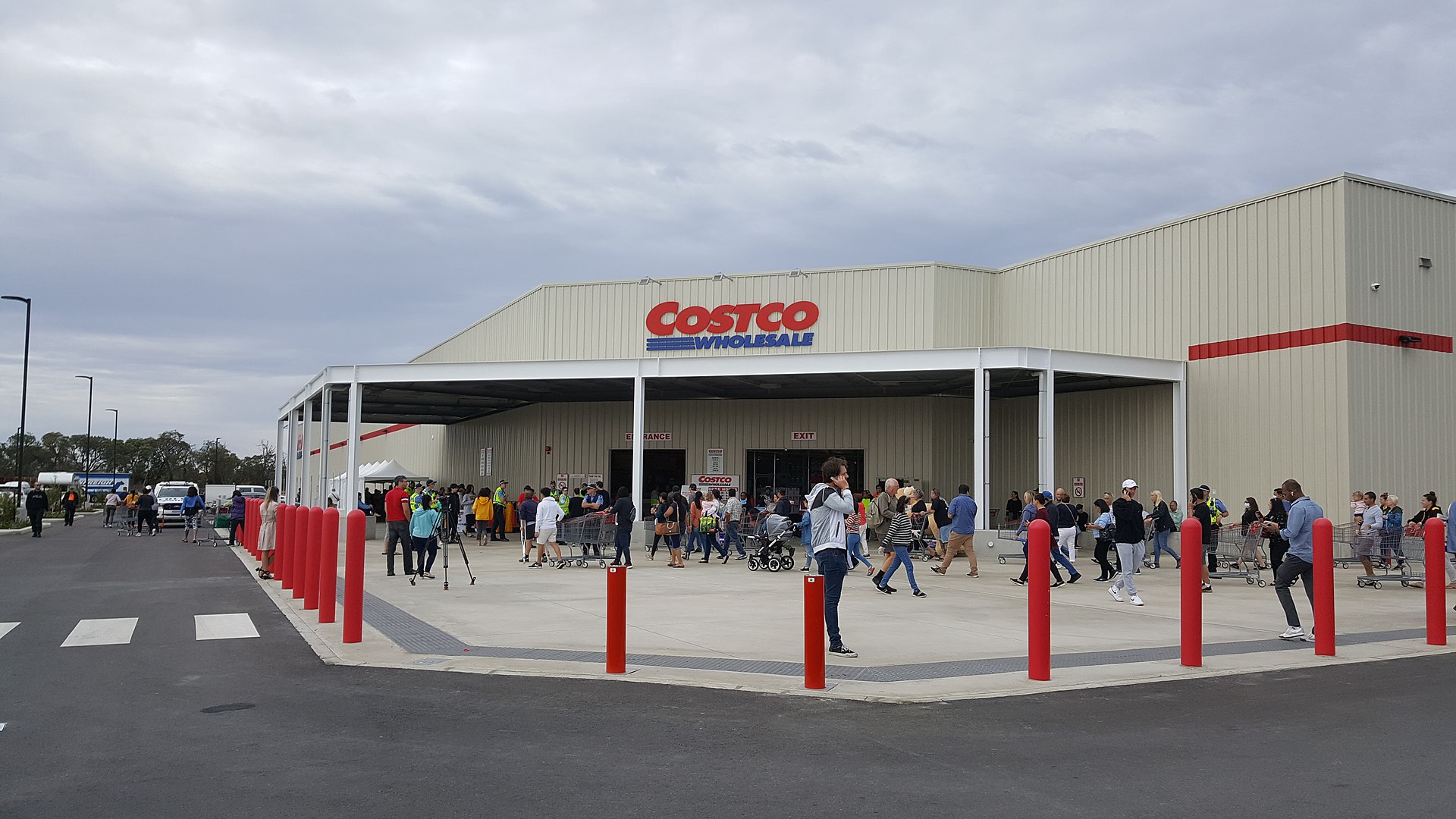
Do you ever wonder why Asheville keeps missing out on exactly what we need? Look no further than Costco.
Right now, the City is staring down a $30 million deficit. Our water infrastructure needs desperate attention, and working-class families are being squeezed out. Yet, when a massive economic engine like Costco comes to town, our broken zoning code completely interrupts our ability to be honest and straightforward with them.
Because the code doesn’t clearly state the rules up front, we couldn’t just hand Costco a checklist of what they need to do to build here. Instead, the City used the “Conditional Zoning” process to negotiate for infrastructure fixes behind closed doors. When Costco pushed back and walked away, the city lost out on millions in tax revenue. Now the taxpayers are left footing the bill for the infrastructure anyway.
For the last two decades, City Council has relied on this broken, outdated 1997 zoning code: the Unified Development Ordinance (UDO). Because the code is so restrictive, almost everything requires a special permit.
Instead of writing clear rules, the city instead negotiates with developers behind closed doors, begging for basic infrastructure like sidewalks and stormwater fixes.
Who wins? Ingles - who land-banks empty lots - and massive out-of-state developers who can afford the $200,000 in legal fees to fight through the process.
Who loses? Local businesses, taxpayers who have unfunded infrastructure needs, and our legacy neighborhoods that are left exposed to predatory speculation.
We can’t keep treating zoning like this. It’s inefficient, inequitable, and ultimately hurts all of us. We cannot fund our city’s future by begging developers for scraps behind closed doors. We have to stop playing negotiator and start actually governing.
Our UDO needs a complete overhaul. Not just a little one.
Here is how we implement a Grand Bargain for Asheville’s zoning code:
1. The Shield: Protecting Our Neighborhoods
Why are long-time residents terrified of zoning changes? Because of predatory displacement.
If we give the free market free reign into our legacy neighborhoods, outside investors will tear down homes and build absolutely unaffordable garbage that can only be purchased by people out of the community because our wages aren’t able to afford it. Neighborhoods that were once full of life become ‘second home neighborhoods’.
The Community Reparations Commission (CRC) spent years drafting recommendations to stop this exact type of gentrification and build generational wealth for Black Ashevillians. They explicitly asked the city to support Community Land Trusts and enforce anti-displacement metrics. We need to stop paying lip service to those recommendations and actually give them teeth through our zoning code.
The Fix: We need to keep base residential zoning strict for for-profit development, but we can write a Community Ownership Exception directly into the UDO.
If a project is owned by a Community Land Trust (CLT) or a Limited Equity Co-op, they get to fast-track the permitting process and build missing-middle housing (like 4-plexes and cottage courts) “by-right.” That way, we’re assured that by-right development happens by our community, for our community. We bake strict anti-displacement metrics directly into the code. Neighborhoods can build affordable wealth, and it gets much harder for out of state speculators to displace them.
2. The Engine: Fixing Our Commercial Corridors
When you drive down Merrimon Avenue, Tunnel Road, or Patton Avenue, you see dying one-story strip malls and massive empty parking lots.
And let us not forget to talk about Ingles. They are notorious for buying up commercial lots across Asheville. You know which ones I’m talking about (Stein Mart, K-Mart, parts of the Mall). They slap deed restrictions on them to block competing grocery stores, and let them sit as blighted, empty properties eating away at our community.
Our current UDO actually protects this kind of corporate land-banking.
Commercial zoning right now is a lengthy and very expensive legal maze. Because it costs so much to rezone a property, new local businesses can’t afford to break into the market, and monopolies get a free pass to sit on dead asphalt. Only massive hotel chains, big out of state housing developers, and corporate monopolies can afford to navigate the system.
The Fix: We switch to a Form-Based Code on every major commercial corridor in the city to make the code hostile to land-bankers.
We eliminate parking minimums. We update our maximum height limits and instate minimum height requirements so we stop getting sprawling drive-thrus and empty lots. Let’s get rid of setbacks. We offer developers a “by-right” density bonus to build 5-story mixed-use buildings (which is so much more cost effective than 3 stories). If they meet the code, you don’t have to spend a boatload in lawyers and time; you just get the permit.
This allows local businesses and midsized developers more access to building in Asheville. This includes apartment complexes. It allows us to handle transit better, and it gives us the ability to make the ART bus system actually work. It makes things more efficient.
3. The Mandate: Ending the Backroom Deals
Right now, when a massive commercial developer comes to town, the city uses conditional zoning because it’s ‘the lever we have’. As we just saw with Costco, the city negotiates it’s needs for the project to succeed and when the developer pushes back and walks away, the city loses out.
The Fix: We put the exactions directly into the UDO.
We stop treating each one of these as a negotiation and just be up front about it. To get that “by-right” permit on our commercial corridors, the UDO will strictly mandate the exactions we were asking for anyway. Underground parking, high LEED standards, baked-in affordable housing, and green stormwater retention. It takes all this stuff out of the backroom deals. We take politics and negotiating off the table, and just make things into a checklist.
4. The Cost of the Trap: Who Pays?
Right now, negotiating infrastructure is how we protect taxpayers. The reality? It’s inefficient. It hasn’t worked. Most of the time, we have to eat the costs of the infrastructure that’s been neglected for decades.
When a project like Costco dies in a backroom negotiation over lane widths, the substandard roads and broken stormwater don’t just disappear: they remain a public liability. We lose millions in annual tax revenue while keeping all the repair costs.
In my platform, we fund a public ‘Infrastructure Checklist’ through existing permit fees, not new taxes. By being honest and straightforward on day 1, we ensure that the developers working to build in our commercial areas are the ones paying to fix the pipes and pavement so that we can stop the hidden tax of negotiation before it hits your wallet.
The Result: The Grand Bargain
This is how we close the loop.
By aggressively up-zoning our commercial corridors (The Engine), we trigger a massive wave of new, high-value commercial property tax revenue. We then take that new long-term revenue and funnel it directly into the Affordable Housing Trust Fund so that we can stop the displacement.
This also does exactly what the CRC asked for:
-
It funds Community Land Trusts: We subsidize the land acquisition for Co-ops and CLTs in our legacy neighborhoods (The Shield).
-
It builds wealth, not just rentals: Limited Equity Co-ops give working-class residents an actual ownership stake and a pathway to generational wealth.
-
It protects legacy homeowners: We can use a fraction of this new commercial revenue to freeze property taxes for long-term residents, stopping displacement in its tracks.
Instead of begging developers for one-off donations, we can use this new, reliable revenue stream to finally put real, dedicated funding behind the reparations recommendations, not just to repair the damage done sixty years ago, but to build a future for everyone.
The Dividend: Why This Matters to Everyone
Even if you aren’t looking for a new apartment or trying to open a business, this matters to you. Right now, Asheville’s inefficient and inequitable zoning code is actively contributing to our $30 million deficit.
Every time a project dies in a backroom negotiation, we lose millions in potential tax revenue. That takes legal fees and time off the city’s already stretched budget, pushing costs back onto the taxpayers.
I’m running for City Council to close the loopholes, to be honest and transparent, and to put the power back in the hands of the public.